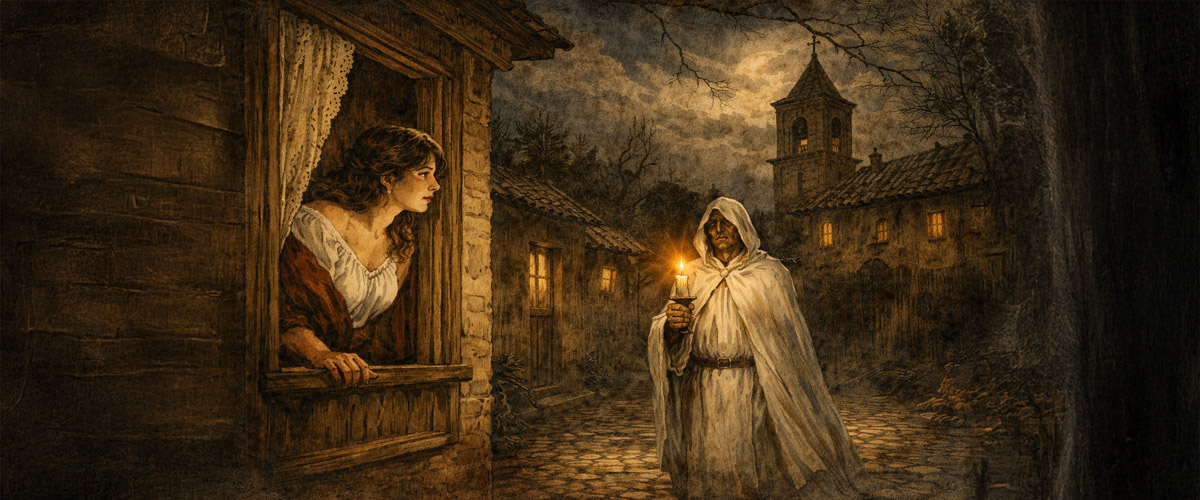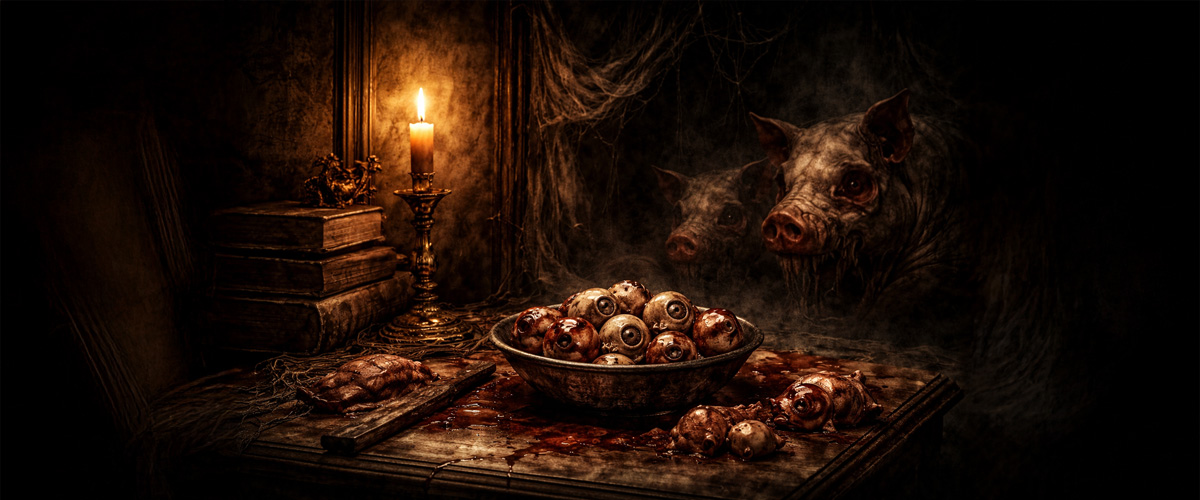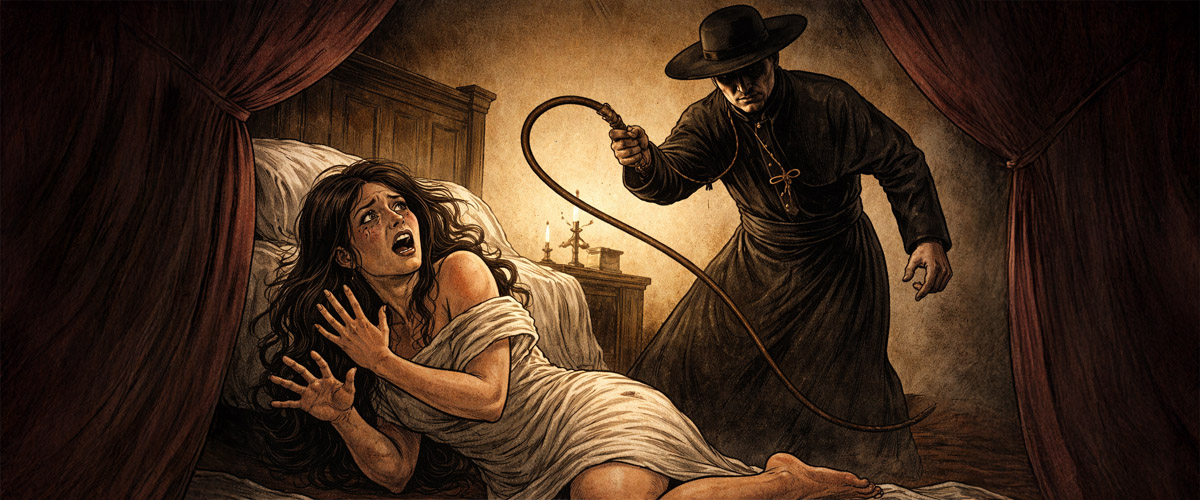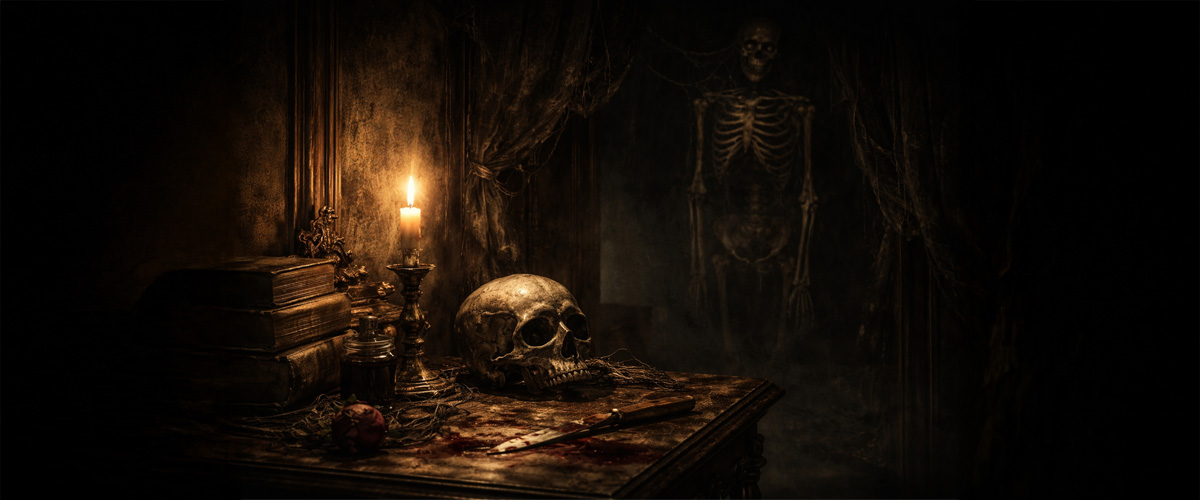
It is often said that horror is a foreign visitor on our bookshelves — something imported, translated, adapted. This idea, frequently repeated, does not withstand closer scrutiny. What we call horror, discomfort, or strangeness has always been present among us, albeit under other forms and names.
In Brazilian literature, the disturbing rarely manifests itself loudly. It prefers silence, patient observation, the everyday gesture that carries something out of place. It does not hurry. It waits. And when it finally allows itself to be perceived, it no longer causes just fear, but a deeper discomfort — that which is born of recognition.
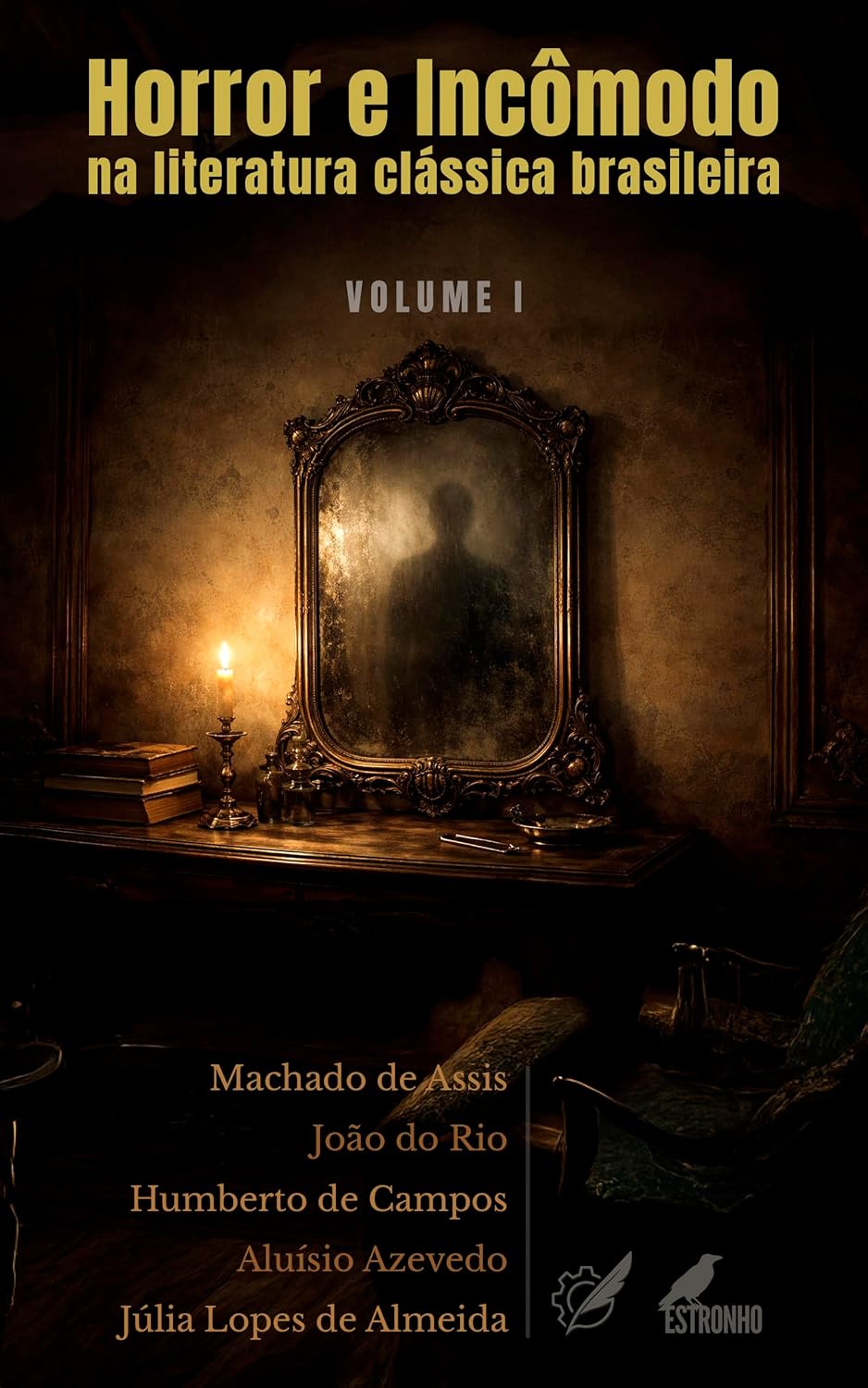
This first incursion into classic Brazilian short stories of horror and unease brings together texts where the unsettling does not rely on overt supernatural elements, but on what is intimate, morally unstable, and essentially human. Do not expect obvious monsters or cheap scares here. What is offered are mirrors — and not all of them return a pleasant image.
A Causa Secreta ─ Machado de Assis
Machado de Assis did not write horror stories in the traditional sense — and perhaps that is why he wrote some of the most disturbing ones. A Causa Secreta is one of those cases where horror does not depend on shadows, but on lucidity.
The story is built with almost scientific precision. Everything seems under control: well-defined social relations, rational discourse, acceptable behaviors. Gradually, however, Machado leads the reader into uncomfortable territory, where careful observation reveals something deeply wrong in what, at first glance, seemed normal.
Here, suspense is born from the reader's gradual perception. There is no rush, no exaggeration. Only the uneasy feeling that cruelty can be silent, polite, and even respectable. A short, elegant — and cruel story.
It is read quickly. It is digested slowly.
O Enfermeiro — Machado de Assis
If in A Causa Secreta horror lies in the contemplation of another's suffering, in O Enfermeiro it arises from forced coexistence with abuse, power, and guilt. The narrative is direct, almost confessional, and places the reader before a morally unstable situation from the very first lines.
Machado plays with the reader's empathy. Nothing is simple, nothing is comfortable. The tension does not come from spectacular events, but from psychological wear and tear, from everyday pressure, and from the way the conscience tries to justify itself.
It is a story about limits — and about what happens when they are crossed. The true suspense here is not what might happen, but how the narrator deals with what has happened.
Cold, human, and frighteningly plausible.
O Espelho — Machado de Assis
Machado de Assis rarely resorts to visible horror. In O Espelho, he does something more unsettling: he dismantles the idea of identity with the calmness of someone who knows exactly what they are doing.
At first glance, it is merely an intellectual exercise — an elegant conversation about the human soul. Nothing threatens, nothing escapes control. But little by little, the story leads the reader to an uncomfortable realization: perhaps the “I” does not exist without the gaze of the other.
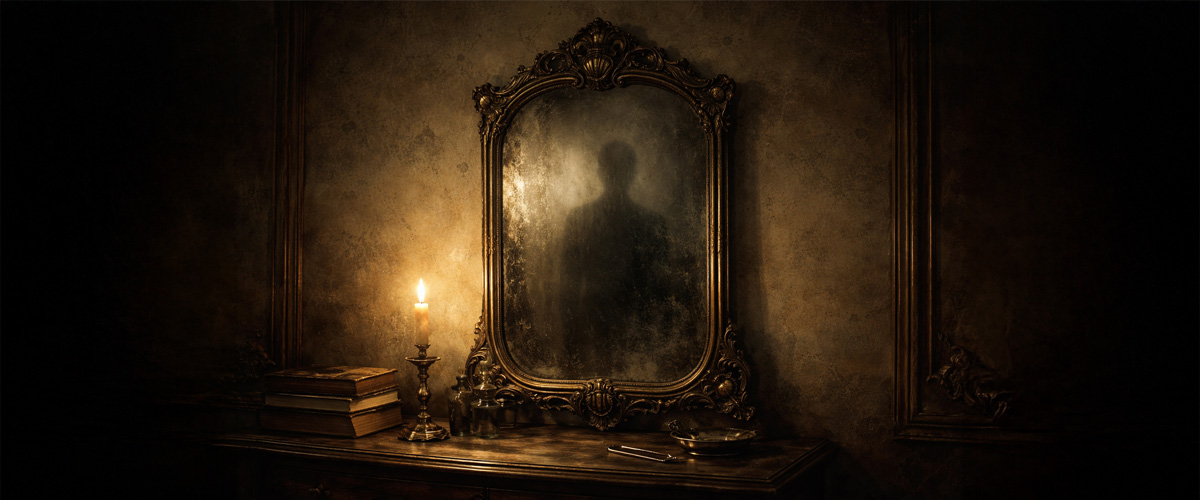
The horror here is silent. It is not in the mirror, but in what it fails to reflect. When identity depends on a uniform, a social role, or a gesture of recognition, the disappearance of the reflection is not a fantastic effect — it is a symptom.
There is no delirium, no punishment, no redemption. The narrator does not go mad: he adapts. And it is precisely this adaptation that is disturbing. The story ends without a rupture, but with the sense that something essential has been lost — and accepted.
A clean, cerebral, and uncomfortable text.
Here, the unease does not come from what emerges in the dark, but from what vanishes in broad daylight.
These stories have not aged. They have only learned to wait. They continue to speak of cruelty, guilt, desire, and dehumanization with a clarity that still disturbs. Perhaps because the monster they point to does not live in distant castles, but in well-lit rooms and silent consciences.
In the chapter 2, other texts await: urban horror, social grotesque, macabre irony. Brazil has more shadows than it usually admits — and some of them write very well.
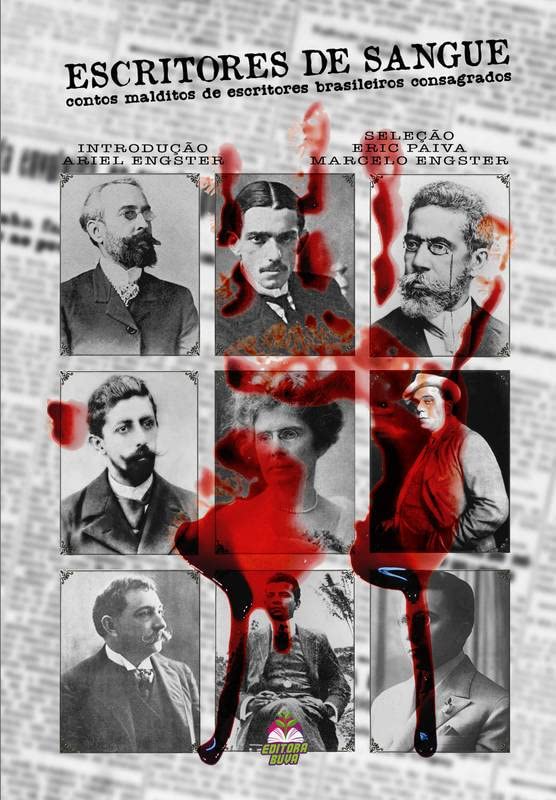
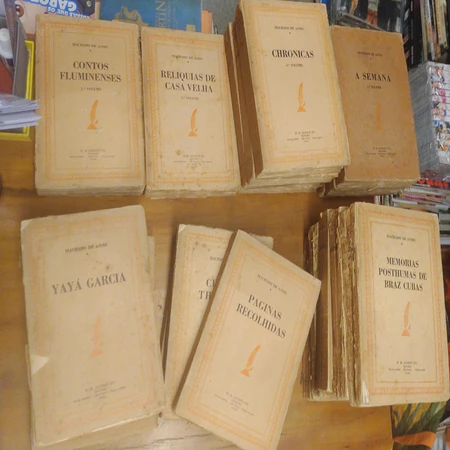
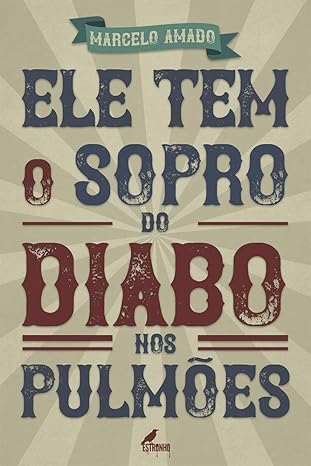
The aforementioned short stories are in the public domain and can be read for free. But for those who prefer revised, updated, or annotated editions, there are great publications ─ digital or print ─ bringing together these and other stories. Here are some suggestions, including our own revised edition with footnotes (click on descriptions to purchase):