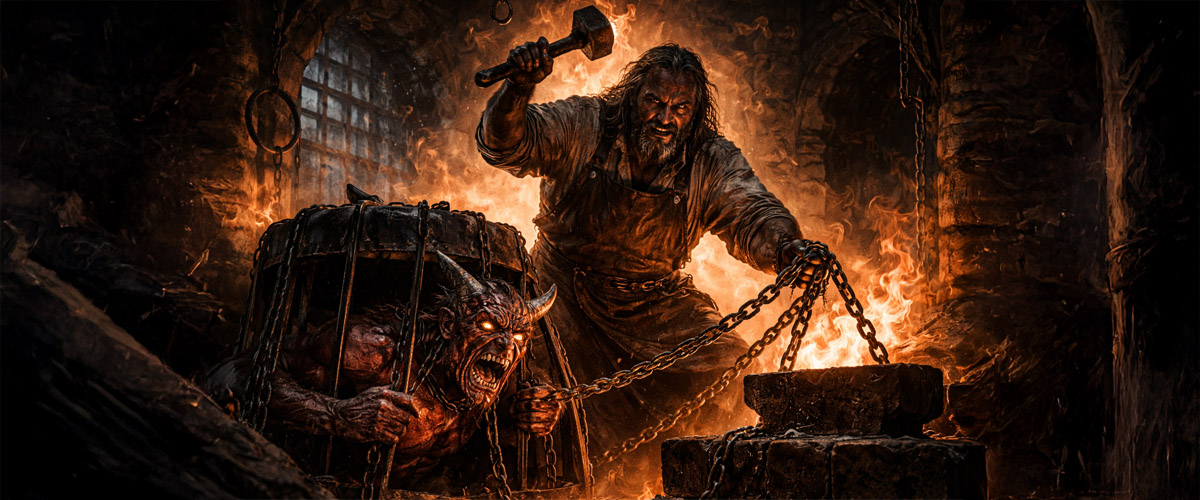





Among the windswept islands in the far north of Scotland, a legend has circulated for centuries of a creature considered not only terrifying, but openly harmful to human and animal life: the Nuckelavee. In the folklore of the Orkney Islands, it is not a mischievous spirit nor an ambiguous being —it is a decidedly malevolent presence, associated with disease, famine, and ruin.
Unlike many legendary figures, the Nuckelavee does not emerge as a moral explanation or an educational allegory. It appears in accounts as the direct cause of real calamities: destroyed crops, ailing livestock, sudden epidemics, and unexplained periods of drought.
A Form That Should Not Exist
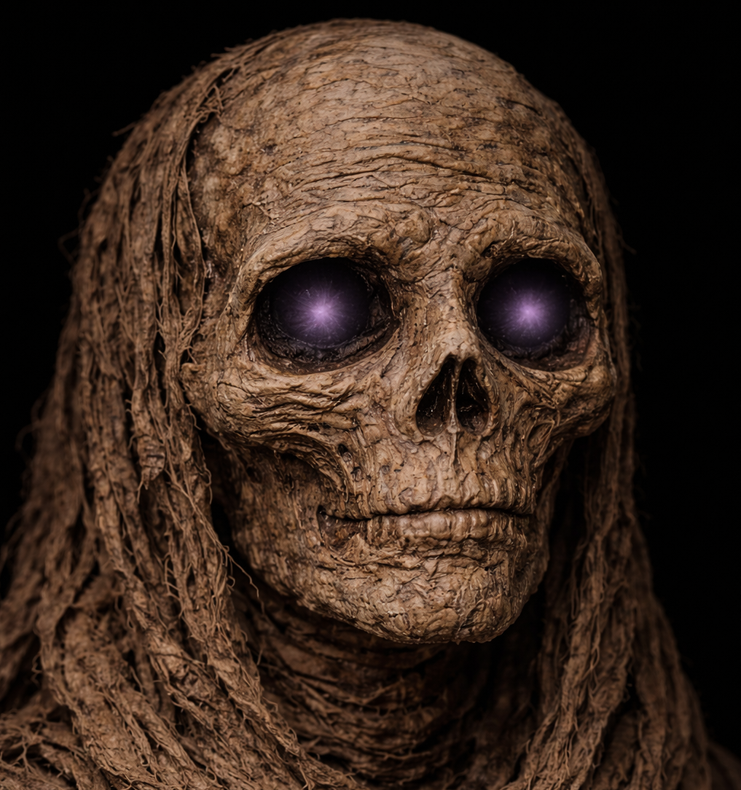
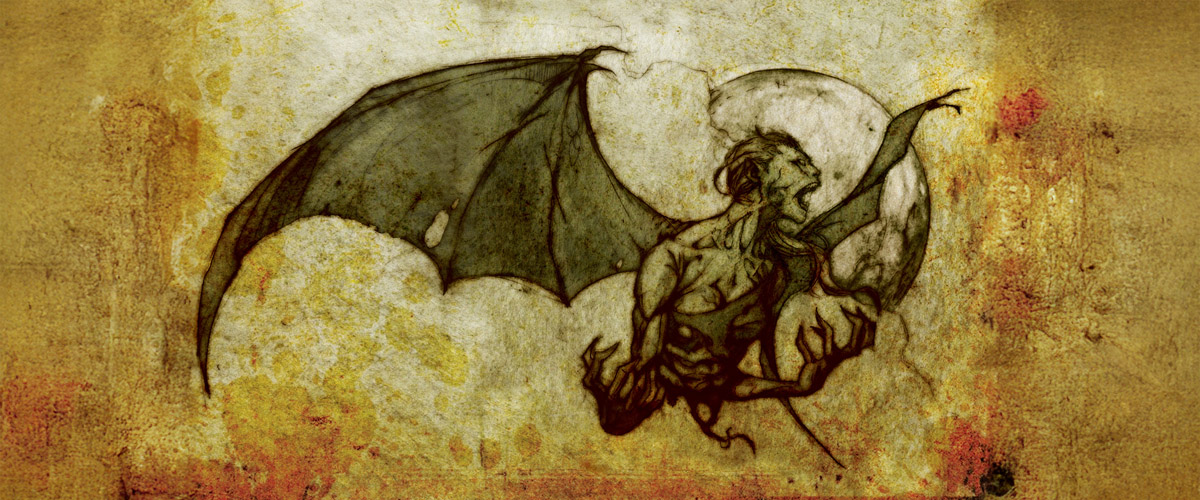
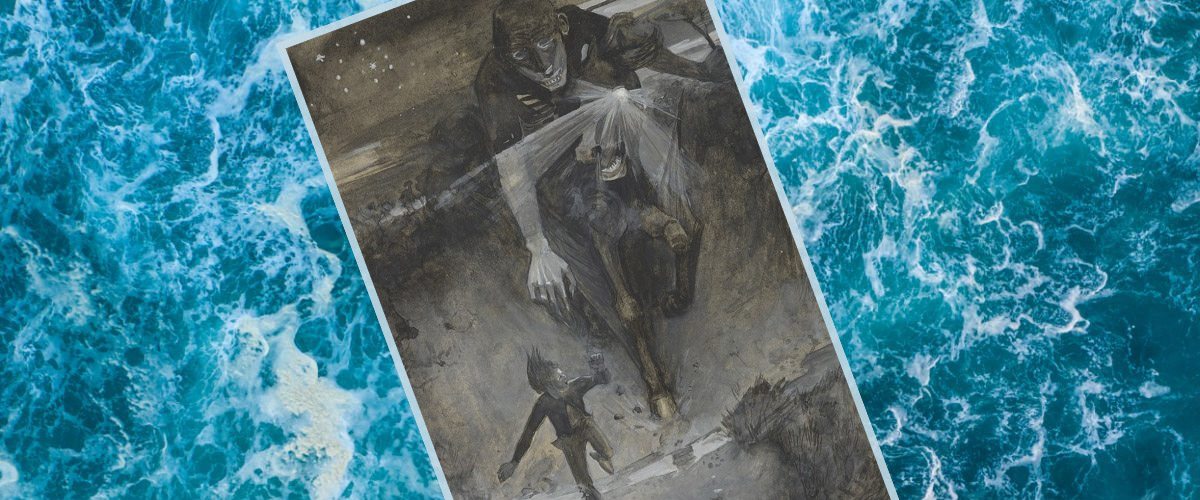
Traditional descriptions speak of a hybrid being, part man, part horse, grotesquely fused together. In its most recurring form, the horse's body supports a human torso attached to its back, as if both were a single deformed organism.
The most disturbing detail is that the Nuckelavee has no skin. Muscles, veins, and tissues are exposed, pulsing under the cold air. The disproportionate human head features burning eyes and toxic breath. Long, flaccid arms drag along as the creature moves.
There are no "softened" versions of this appearance in traditional tales. Visual horror is an essential part of the legend.
Origin and Domain
The Nuckelavee is described as a marine entity, bound to the ocean surrounding Orkney. It was believed that it emerged from the waters to roam the mainland, spreading destruction wherever it passed. Its breath was considered poisonous, capable of withering crops, killing animals, and sickening people just by its proximity.
In communities heavily dependent on agriculture and livestock, the monster became a feared explanation for everything that escaped human control.
Because of this, its name was avoided. Speaking of the Nuckelavee out loud was seen as a risk.
Limits and Confinement
Despite its power, tradition states that the Nuckelavee had a clear weakness: it could not cross fresh water. Rivers and streams functioned as natural barriers, and crossing them was, according to accounts, the only safe way to escape.
Another common belief involves the Mither o’ the Sea, an ancient benevolent sea entity who, during the summer months, imprisoned the Nuckelavee in the depths of the sea. With the arrival of winter, he would be released —coinciding, not by chance, with the period of highest mortality, famine, and disease on the islands.
A Legend of Real Fear
The Nuckelavee is not remembered as a story to scare children. It belongs to an older and rawer type of legend: those born from direct coexistence with a hostile and unpredictable environment.
For the inhabitants of Orkney, it was the personification of forces that truly killed —extreme cold, disease, the loss of livelihood. And while other folkloric creatures could protect or deceive, the Nuckelavee only destroyed.
This is why its presence, even today, remains one of the darkest in Scottish folklore.
Research sources: Portal dos Mitos, Mythlok, The Archaeologist