


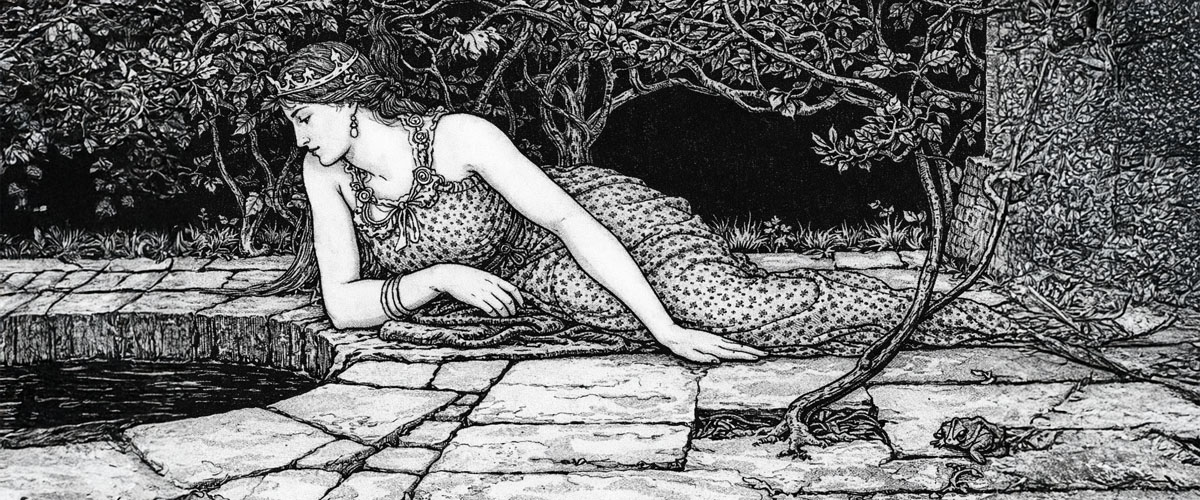
For centuries, Scottish folklore has preserved stories where the marvelous and the cruel walk side by side. Gold-Tree and Silver-Tree is not a fairy tale in the modern sense, but an ancient oral legend, recorded in the 19th century and passed down through generations as a warning against envy, pride, and the destruction born within one's own home.
Unlike the romanticized versions that would later emerge in European literature, this narrative maintains the characteristic harshness of Celtic traditions, where there is no softening of conflict nor symbolic protection for childhood.
The Written Record
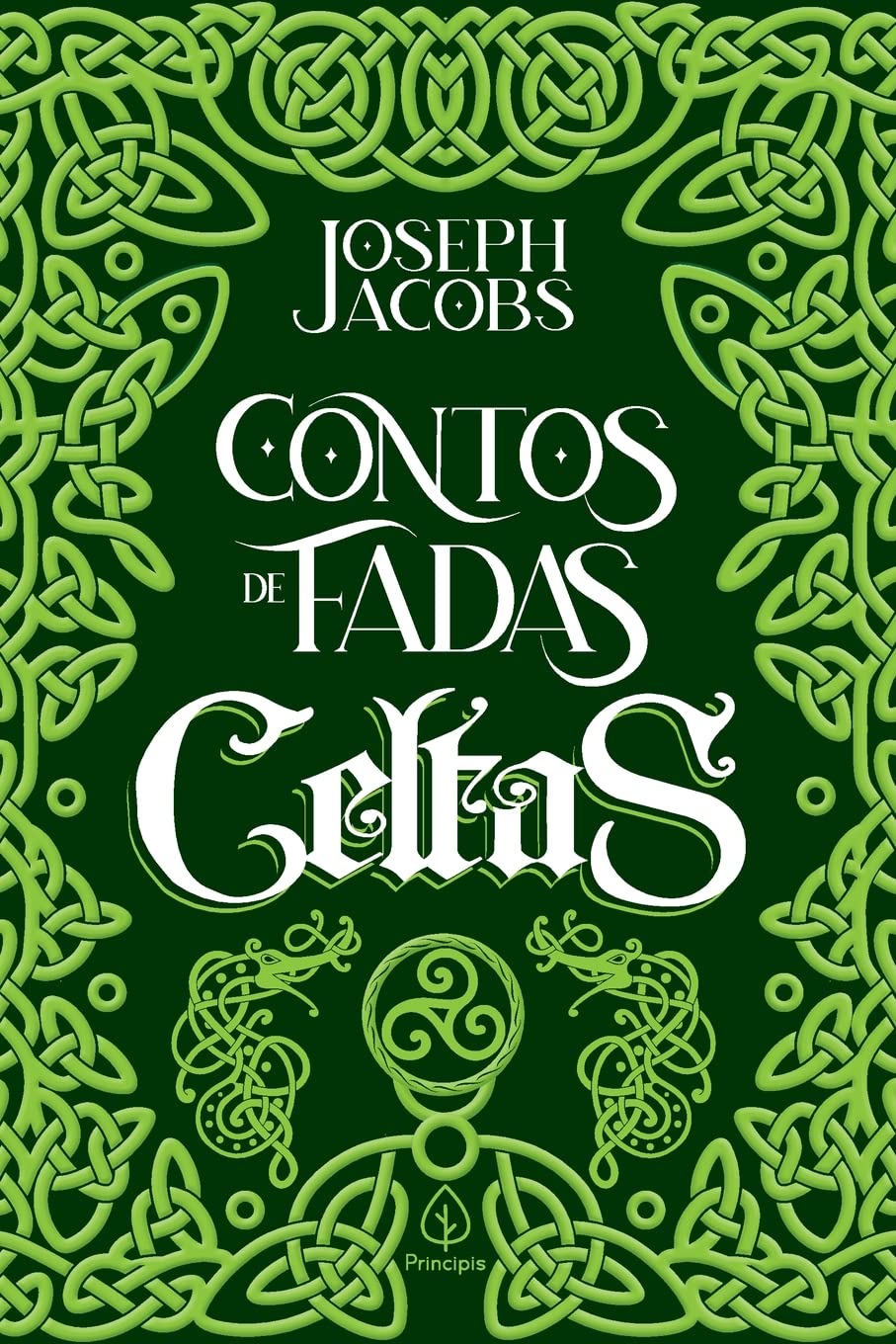
The best-known version was collected by Joseph Jacobs and published in Celtic Fairy Tales (1892), the result of an effort to preserve narratives that had already been circulating orally for centuries in the Scottish Highlands.
Folklore scholars classify the story as a primitive variant of the ATU 709 narrative type, the same mythical trunk that would later give rise to the tale known as Snow White. However, the elements here are older, more symbolic — and far more disturbing.
The Mirror That Lives in the Water
In place of the magic mirror, the queen consults a talking trout that inhabits a well. In the Celtic imagination, water is a threshold between worlds, and fish are guardians of hidden truths. The well does not lie — and it is precisely this truth that awakens the queen's hatred by revealing that her daughter, Gold-Tree, has surpassed her in beauty.
This detail is not ornamental: it reflects a worldview in which nature observes, judges, and responds, without human mercy or compassion.
Crime Within the Family
Consumed by envy, Silver-Tree orders her daughter to be killed and demands the young woman's heart and liver as proof. This request, recurrent in archaic narratives, echoes symbolic rituals linked to vitality and identity — body parts associated with the essence of life.
The young woman survives the initial betrayal but ends up poisoned by her own mother. Unlike later versions of the myth, there are no merciful hunters or immediate punishments: there is silence, apparent death, and abandonment.
The Return and Belated Justice
Gold-Tree is restored to life not by divine magic, but by human intervention: another woman removes the poisoned object from her body. This detail breaks with the idea of absolute fate and suggests that even in worlds governed by dark forces, conscious action can still alter the course of events.
The queen, finally, succumbs to her own malice — a common outcome in ancient folk narratives, where punishment does not come as redemption, but as an inevitable consequence.
Survival of the Myth
Gold-Tree and Silver-Tree crossed centuries because it speaks of something universal and uncomfortable: danger does not come from enchanted forests, but from within the home.
This legend did not seek to entertain children, but to alert communities. In a world where survival depended on family cohesion, envy was seen as a destructive force as lethal as hunger or cold.
Thus, the tale remains — not as a fable, but as a vestige of an ancient mentality that saw the supernatural not as fantasy, but as a reflection of human shadows.
Gold Tree and Silver Tree
It is said that in ancient times, there lived a queen named Silver-Tree. Every day, she would go to a well near the castle, where an ancient and wise trout lived. To the water, Silver-Tree always asked the same question: who was the most beautiful woman in the kingdom?
For years, the answer was unchanging: it was herself.
Until the day the trout answered differently. It told her that the most beautiful was no longer Silver-Tree, but her own daughter, Gold-Tree.
From that moment on, the queen fell ill. Not with fever or physical pain, but with envy. Each day, her condition worsened, and no remedy seemed to take effect. When questioned about the cause of her ailment, Silver-Tree confessed she would only be cured when her daughter was dead.
She then ordered a trusted man to take Gold-Tree far away and kill her. As proof, she demanded they bring her the heart and liver of the young woman.
The man took the princess with him, but, moved by pity, he did not have the heart to carry out the order. In place of the queen's daughter, he killed a wild animal and presented its organs as if they were the young woman's. Silver-Tree, convinced, believed her daughter was dead and, satisfied, recovered her health.
Gold-Tree, however, remained alive. In time, she left those lands and married a prince from another kingdom. She lived for years without her mother knowing her whereabouts.
But Silver-Tree returned to the well one day. And once again, she asked the trout who was the most beautiful of all. The answer was the same: Gold-Tree, her daughter, still lived — and was more beautiful than ever.
Taken again by fury, Silver-Tree set out in search of the young woman. Upon finding her, she feigned reconciliation and offered her a drink. Gold-Tree drank, unaware that the wine was poisoned, and immediately fell, motionless, as if dead.
The prince, overcome with grief, did not allow the body to be buried. He ordered her to be placed in a locked room, preserved, for the body did not decay or show signs of decomposition.
Years later, the prince took another wife. Upon seeing the chamber where Gold-Tree lay, the new queen noticed something strange: there was an object hidden in her body, responsible for the deadly enchantment. Carefully, she removed it. At that very moment, Gold-Tree woke up, as if she had only been sleeping.
When Silver-Tree learned that her daughter lived once more, she tried to flee. But she ended up drinking the same poison she had prepared for the young woman. Thus she died, without honor and without lament, a victim of her own malice.
And Gold-Tree lived on, while her mother came to be remembered only as a warning.
Source: The Scottish Fairy Book, by Elizabeth W. Grierson - Project Gutenberg, SurLaLune, Celtic Fairy Tales/Notes and References