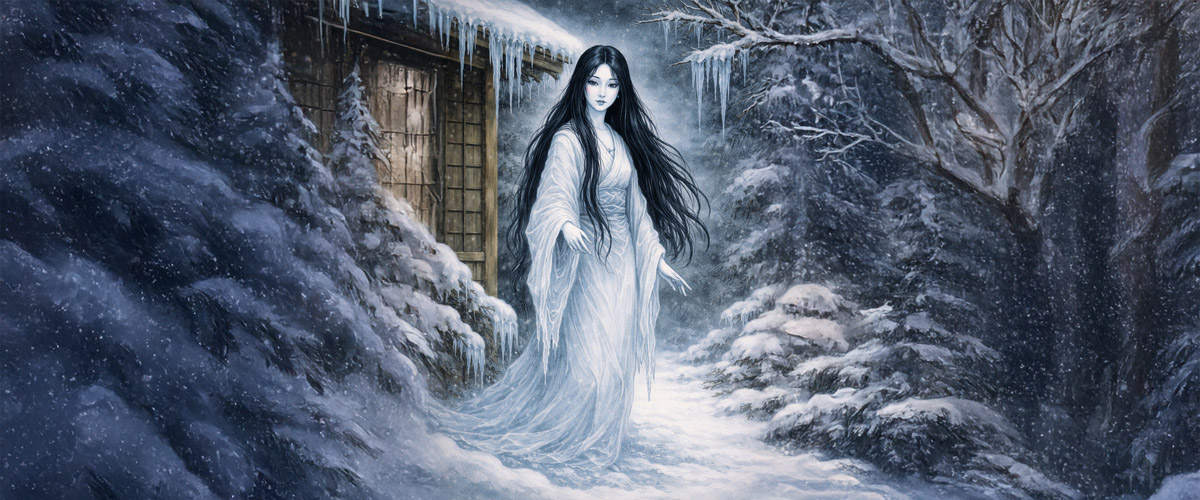
In cold regions of northern Japan, especially in Tōhoku, there are ancient reports of a woman who does not fall ill from the cold, does not seek warmth, and cannot survive contact with hot water. She is known as Tsurara-Onna, the Icicle Woman —an entity associated with icicles, harsh winters, and silent death within the home.
Unlike other folkloric figures, the Tsurara-Onna does not appear as an obvious monster. She appears as an ordinary woman. The danger only reveals itself when winter meets warmth.
The wife who never bathed
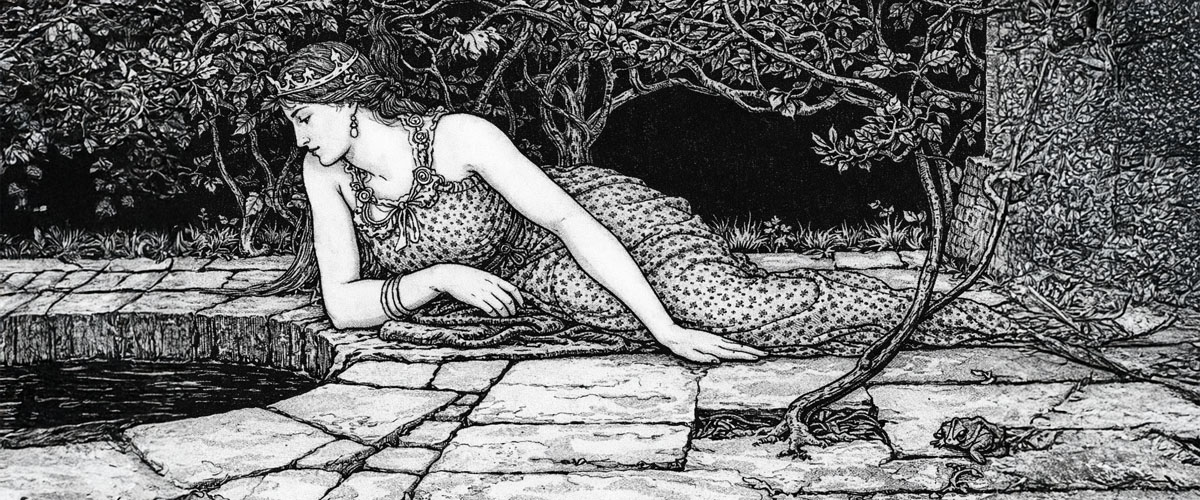
In one of the best-known versions of the legend, a man marries a gentle and beautiful woman. He is happy, but soon begins to feel unsettled by one detail: his wife never bathes, even on the coldest nights. The husband fears for her health and repeatedly insists that she warm herself in the bathtub.
The woman is reluctant, avoids the subject, but eventually gives in. The man prepares a hot bath and steps away to give her privacy. Time passes. Hours later, worried, he goes to the bathhouse.
The bathtub is empty.
Around it, only broken fragments of ice, like shattered icicles. Little by little, these pieces melt and disappear. The woman is never seen again.
This version is primarily associated with the Aomori and Niigata provinces in northern Japan.
Regional variations
In Yamagata, the woman is not taken to the bath. Instead, she enters the kitchen to warm sake for her husband. After a long wait, he goes looking for her and finds only shards of ice scattered on the floor.
In Akita, the story changes slightly: a couple shelters a young traveler during the winter. Against her will, she is led to a hot bath. The result is the same —broken ice, disappearance, and implied death.
The icicle dagger
Another version of the legend follows a more violent path.
In it, the man does not force his wife to warm herself. They live together in harmony throughout the winter. With the arrival of spring, however, the woman begins to show signs of restlessness. One day, she simply disappears, leaving the door of the house open.
The man believes he has been abandoned. Over time, he rebuilds his life, marries again, and brings his new wife to the same house. Summer passes without incident.
When winter returns, the man notices an abnormally large icicle forming on the eaves of the house. Stepping out to observe it closely, he sees his former wife —consumed by hatred for having been replaced.
Moments later, the new wife hears a scream from outside. Stepping out, she finds her husband dead, with a large icicle piercing through his head through his eye.
What is said about her
The Tsurara-Onna is not described as a common vengeful spirit nor a simple ghost. She is bound to winter and cannot survive the heat. To force her to warm herself is to condemn her to destruction —and this carries fatal consequences.
The legend offers no clear moral, nor redemption. It simply repeats, across different regions, the same idea: there is something in the cold that should not be brought inside the house.
Source: Hyakumonogatari Kaidankai.