

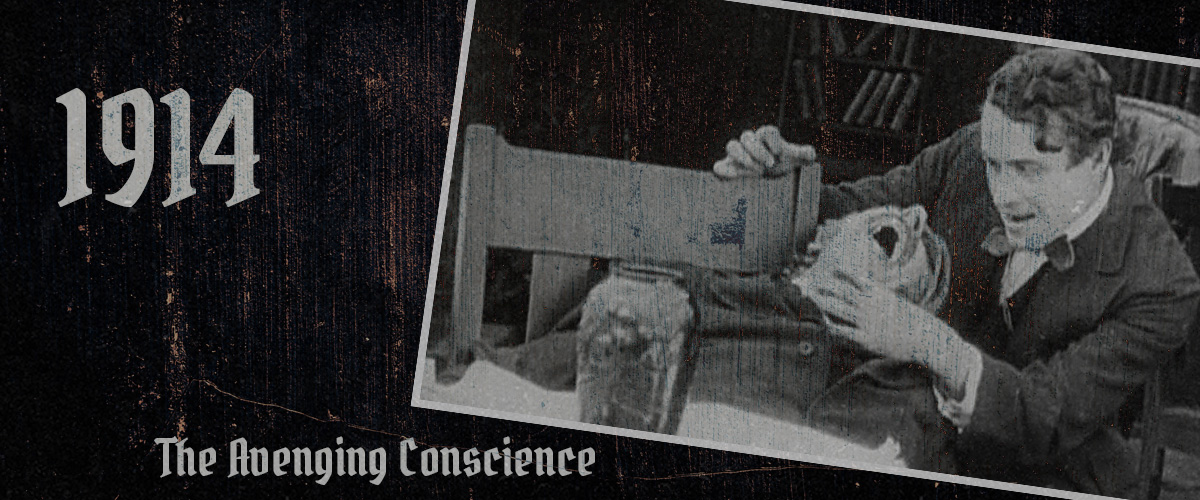
Let us once again resist the temptation to run straight toward ghosts, demons, stage tricks, and visible monsters. The Avenging Conscience, directed by D. W. Griffith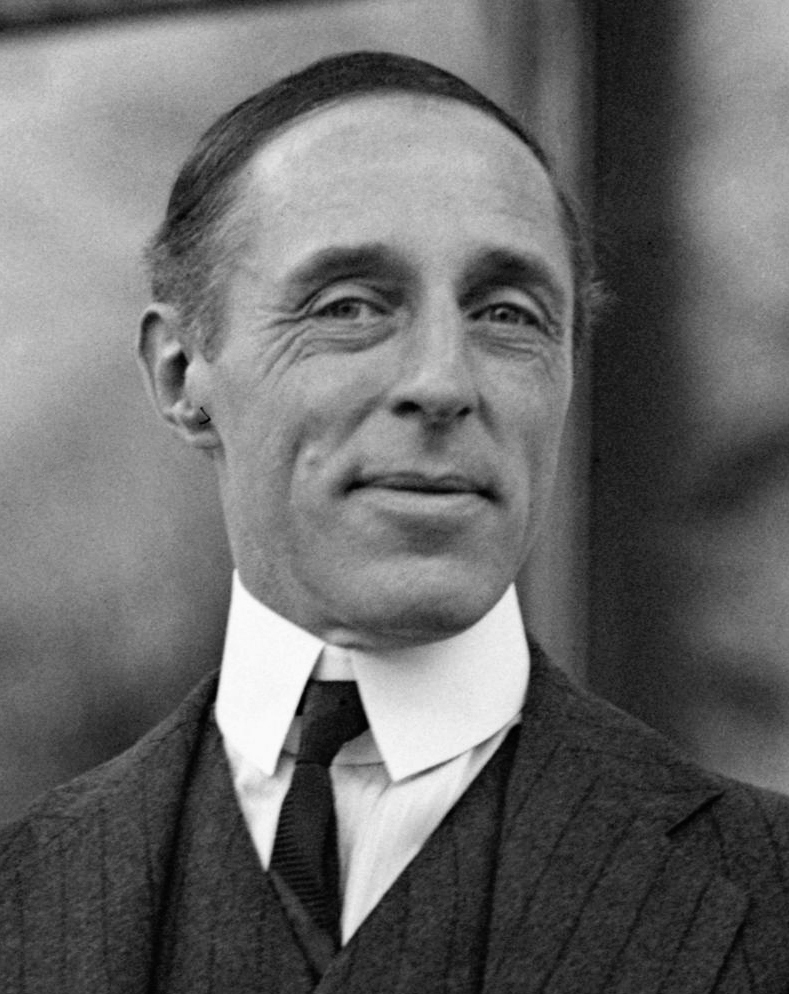 , brings us the horror of the human mind.
Released in 1914, the film is often described as a moral drama, almost a Christian parable about crime and punishment. But it is also something more unsettling: a deep dive into psychological horror, where the true punishment comes neither from the law nor from the explicit supernatural, but from the conscience that refuses to be silenced.
The work is based on two texts by Edgar Allan Poe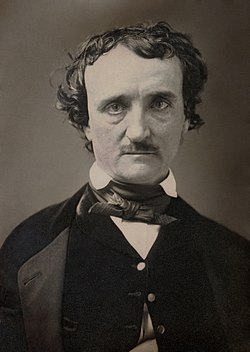 . However, Griffith does not faithfully adapt the texts. Instead, he builds the film from a fusion of ideas and atmospheres drawn from The Tell-Tale Heart and the poem Annabel Lee.
From Poe come the obsession, the guilt that materializes into hallucinations, the feeling that the crime never ends with the act itself. The idealized love and the fragile female figure evoke Annabel Lee, while the moral weight and paranoia are direct echoes of The Tell-Tale Heart. There is no heart beating beneath the floorboards, but the effect is the same: the criminal is defeated by himself.
. However, Griffith does not faithfully adapt the texts. Instead, he builds the film from a fusion of ideas and atmospheres drawn from The Tell-Tale Heart and the poem Annabel Lee.
From Poe come the obsession, the guilt that materializes into hallucinations, the feeling that the crime never ends with the act itself. The idealized love and the fragile female figure evoke Annabel Lee, while the moral weight and paranoia are direct echoes of The Tell-Tale Heart. There is no heart beating beneath the floorboards, but the effect is the same: the criminal is defeated by himself.
The plot revolves around a young man dominated by an authoritarian and cruel uncle, who violently opposes his romance. The murder arises almost as a desperate impulse—and, for a few moments, it seems like a resolution. But peace does not come.
After the crime, the film abandons any illusion of normality. Visions, delusions, symbolic images, and ghostly figures begin to occupy the screen. It is not a literal haunting, but guilt incarnated in image. Horror here does not chase the character: it dwells within him.
The Avenging Conscience represents the moment when cinema begins to explore internal, psychological, and moral fear. Griffith uses double exposures, symbolic visions, and religious imagery to translate mental states—a language that anticipates, albeit in embryonic form, the paths that German Expressionism and 20th-century psychological horror would explore more radically.
The alternative title, Thou Shalt Not Kill, is no coincidence. It functions as a moral shield. In an era of increasing surveillance over film content, crime had to be accompanied by clear punishment. And it comes—not only through the final confession but through the protagonist's mental breakdown. This moral framing allowed the film to circulate widely while simultaneously introducing deeply disturbing images and sensations to the audiences of the time.
More than a century later, The Avenging Conscience remains relevant not because it shocks, but because it unsettles. It shows that horror in cinema was not born only from the grotesque or the fantastic, but from the confrontation with that which cannot be hidden: guilt, repressed desire, and the collapse of the mind. In the origins of horror, before the monsters, came the fear of oneself.
Where to watch?
Youtube: Silver Screen Filmothèque Channel
Youtube: Cult Cinema Classics Channel
Research sources: iMDB, AFI Catalog of Feature Films, Library of Congress,