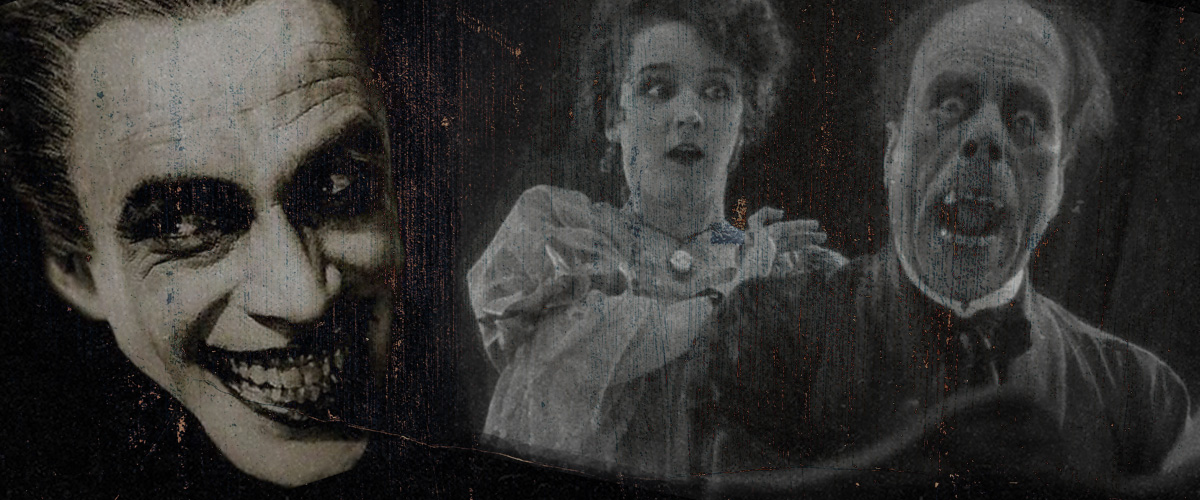
Horror in cinema was not born with established vampires or rubber-masked creatures. It came before that —raw, experimental, often disguised as a curiosity, a visual game, or a simple fairground trick.
In the early years of cinema, fear was not a genre. It was a curiosity... or a side effect.
Moving images were, in themselves, disturbing. Seeing animated bodies, objects moving on their own, figures appearing and disappearing before the audience's eyes caused a strangeness difficult to imagine today.
Silent cinema inherited much from illusionism, shadow puppetry, magic lanterns, and magic shows —spaces where the supernatural was always present. It was on this ground that horror began to creep in.
It did not emerge as an elaborate psychological narrative, nor as a conscious social critique, but as a visual impact: demons rising in clouds of smoke, animated skeletons, bodies disintegrating, heads exploding or multiplying. It was all very direct, sometimes with an almost childish and comic tone —and that is exactly why it worked.
Here, we will talk about a diversity of directors, actors, and works: from the most well-known —and, for some, already overdone— like Georges Méliès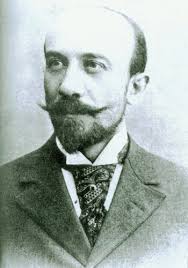 , to names rarely explored by film sites and channels. Those first shorts, often ignored or treated as curiosities, where horror didn't yet have a name, but already had a form. Short, fragmented works, sometimes comic, sometimes grotesque, that helped shape the visual vocabulary of fear in cinema.
By no means am I here to disparage Méliès —quite the opposite. He is, undoubtedly, one of the most important names when talking about cinema and bears a significant share of responsibility for introducing and popularizing horror on the big screen. Not because he created horror as we know it today, but because he was the one who realized, early on, that cinema could materialize the impossible. His shorts explore appearances, disappearances, metamorphoses, and infernal figures with a naturalness that lays bare the common origin between cinema and magic performance.
Here, fear doesn't come from the story —it comes from the image.
Before tragic monsters, there was the jump scare. Before the atmosphere, the trick. Before conscious horror, the wonder..
Shorts and Micro-shorts
It is not uncommon to see film sites and articles simply ignore the short films from the early days of cinema when trying to present the origins of horror on screen to the reader. And here I’m going to sound repetitive: except, perhaps, for the works of Georges Méliès. Often, there is almost an obligation to mention him, just so as not to seem uninformed. And look who's talking... here we are talking about him too, even when the idea is to rescue other names. Anyway, the sweet hypocrisy of an editor and his amateur texts... mea culpa.
But we also cannot omit, for example, Le Manoir du Diable (1896), filmed in Méliès's own studio and conceived entirely based on the theater of illusions. In just three minutes, what is considered the first horror film emerges. Three minutes were enough to experiment with special effects, narrative, and technique —and still cause shock, curiosity, and buzz in the streets and clubs of the city... and from the city to the world.
Newer generations will probably laugh, find it ridiculous, poorly made... and downplay its importance. We can only lament it. It's like this in any field —from art to technology. Human beings never disappoint: we know what to expect from certain small minds. Forgive the outburst. Anyway, if you haven't watched it yet or want to see it again, the short is available on YouTube at several links, but I recommend this one, from the channel that gathers Méliès's works. You can take the opportunity to explore his entire body of work. It’s worth taking a look at Escamotage d'une dame au théâtre Robert Houdin, just one minute long, also from 1896.
But as I said before, we are not going to focus on "Georgie." On the indicated channel above, you can indulge yourself as much as you like. Talking about him here would be preaching to the choir. There are many sites and channels that dissect his work —some with technical analysis, others with that touch of arrogance typical of film critics.
In the next article of this collection, we will begin our journey... amateur, but fun.