



Cannons and firearms forbidden near homes
If you live in an urban area in the United Kingdom and happen to own a pet cannon, be aware that you are not allowed to fire it. An 1839 law prohibits anyone from firing a cannon or any large-caliber firearm within 300 meters of a residential area. Curiously, the law does not focus solely on danger, but on the “noise nuisance” caused to neighbors. Firing a blunderbuss or a cannon to celebrate a birthday in your backyard could earn you a hefty fine.
Taxis and Horses: The mandatory bale of hay in the trunk
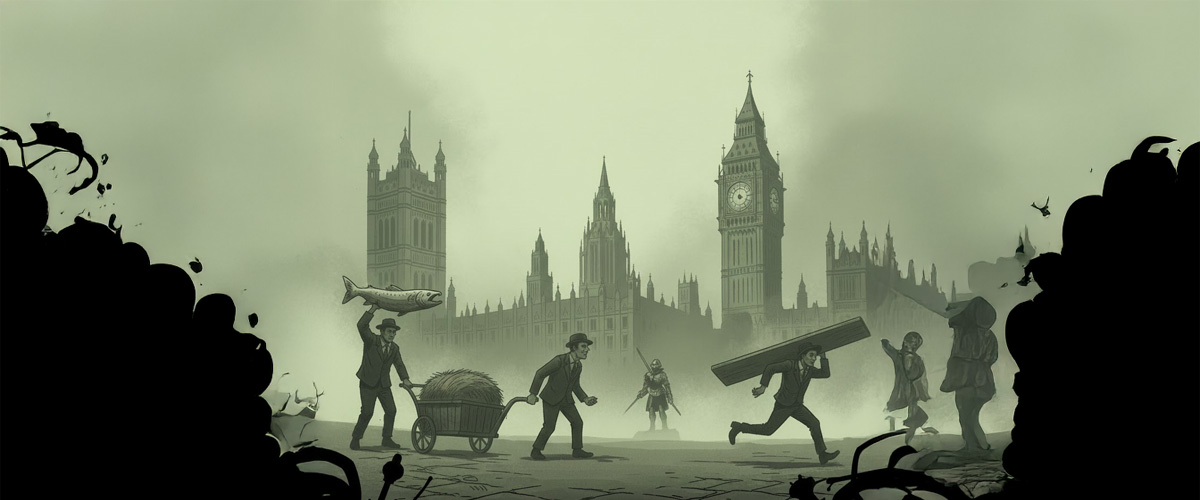
In London, for centuries, “Hackney Carriages” (rental carriages) were legally required to carry a bale of hay and a sack of oats. The rule was an animal welfare measure to ensure that horses did not go hungry during the working day. With the arrival of automobiles, the law fell into obscurity and, for decades, drivers of motorized taxis could technically still be fined for not carrying food for an animal that no longer existed. Although no longer enforced, it remains one of the greatest curiosities of the transition from animal traction to combustion engines.
No Iron in the Chamber: The ban on armor in Parliament
If you decide to visit the British Parliament, leave your plate armor in the cloakroom. The Statute of Prohibition of the Use of Armor of 1313, decreed by King Edward II, is still technically in force. At the time, nobles often settled political disputes at sword point. To prevent legislative sessions from turning into knightly duels or outright massacres, the king banned the entry of anyone “armed or protected by iron.” To this day, it is because of this tradition that members of parliament may not wear any form of military protection or carry weapons in the chamber.
Beating carpets in the street is forbidden (after 8 a.m.)
If you plan on doing some heavy cleaning in London, it’s best to wake up early. According to Section 60 of the Metropolitan Police Act of 1839, it is illegal to beat or shake any carpet or rug in the streets of the British capital. There is a small exception: you may beat your doormats, but only before eight in the morning. The law aimed to reduce dust and nuisance in public thoroughfares at a time when streets were the center of social life.
Carrying a wooden plank on the sidewalk is a crime
Be careful when leaving the hardware store in London. The Metropolitan Police Act of 1839 prohibits anyone from carrying a plank, barrel, ladder, wheel, pole, or hoop on a sidewalk, except for the purpose of loading or unloading a vehicle. The original goal was to prevent workers and deliverymen from blocking the intense pedestrian flow on the narrow sidewalks of the Victorian era. If you are carrying a wooden plank on your shoulder and are stopped by the police, you are technically breaking the law.
Livestock has the right of way (and may not be driven during the day)
The same 1839 law that banned carpet beating also complicated life for livestock owners. It is illegal to drive cattle through the streets of London between 10 a.m. and 7 p.m. unless you have special permission from the police. If you see a flock of sheep crossing London Bridge, they should technically be doing so under cover of darkness or at very specific times so as not to disrupt carriage traffic (and now buses).
Being drunk while in charge of a horse (or a cow) is forbidden
If you think drunk-driving laws are modern, the British were already concerned about this in 1872. The Licensing Act of that year establishes that it is a crime to be found drunk in any public place while in charge of a horse, cattle, carriage, or even a firearm. The law was later updated to include cars, but the original wording about “driving a cow while intoxicated” still appears in the records, предусматривая a fine or even imprisonment with hard labor.
The Fish Crime: Handling salmon in “suspicious circumstances” is forbidden
In the United Kingdom, carrying a salmon can be a criminal act if you do not have a good explanation. The Salmon Act of 1986 (Section 32) was not written out of madness, but to target river poachers. The law is so broad that, technically, if you receive a fish as a gift and the giver caught it illegally, you become an accomplice the moment you lay hands on it. The term “suspicious circumstances” gives the police the power to intervene even without catching someone in the act on the riverbank, making the handling of the fish itself the corpus delicti.
Be careful when “wiping your hands” on someone else’s horse
This comes from old London statutes and reflects street etiquette (or the lack of it). It was illegal and punishable by fine to use another person’s horse’s mane or tail (especially patrol horses or public carriage horses) to wipe your hands or face. It may seem obvious today, but the law existed to prevent pedestrians or passengers from using animals as “living towels” after eating something on the street or getting dirty with the city’s mud.
Bonus Curiosity (Almost a Legend)
There is a very famous urban legend that says “it is illegal to die inside Parliament.” In reality, this has been debunked by British legal scholars. What used to happen is that if someone died in the royal palace (which Parliament technically is), they would be entitled to a state funeral, which was very expensive — so guards tried to remove the person from the building before officially declaring the death!